

Skyward Innovations: Airbus Zephyr Solar Drone Wraps Up Latest Test Journey
Airbus Zephyr Solar-Powered Drone Achieves Key Test Milestones
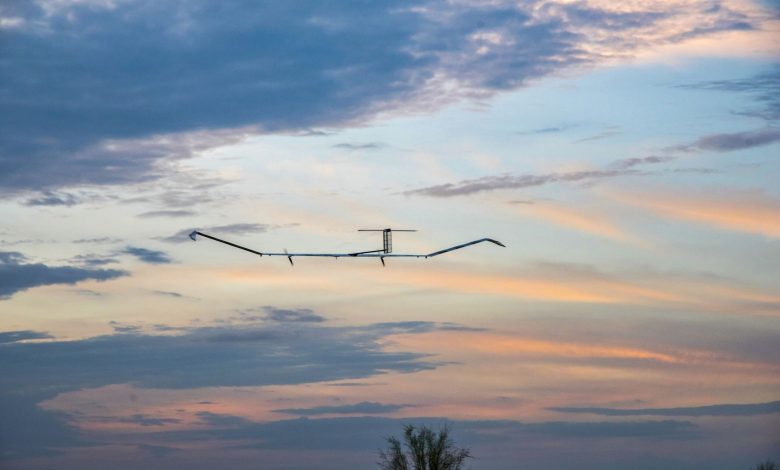
Airbus Defence and Space has announced the successful completion of a groundbreaking test flight campaign for its Zephyr High Altitude Platform Station (HAPS) in Arizona, USA.
The 2020 flight campaign was a remarkable success, overcoming global challenges posed by the Covid-19 pandemic. This effort focused on enhancing the aircraft’s agility, control, and operation, building on previous successful campaigns that showcased the unmanned aerial system’s (UAS) day-and-night stratospheric persistence, critical for both military and commercial applications.
Conducted during the first three weeks of November, this year’s campaign aimed to highlight the operational flexibility and agility of the aircraft. It specifically tested lower altitude flights and the initial transition to the stratosphere, validating a new flight planning tool suite and developing operational concepts through a series of varied flights.
“Having established stratospheric flight capabilities, we aim to refine the operational system further, enhancing its flexibility and robustness to meet our customers’ requirements. The results of this campaign contribute significantly to the full flight program scheduled for next year,” stated Jana Rosenmann, Head of Unmanned Aerial Systems at Airbus.
The campaign involved a Zephyr aircraft equipped with new software control systems and specialized flight test instruments, alongside complementary lighter test aircraft to conduct multiple successful flights throughout November.
The tests effectively demonstrated all phases including take-off, climb, cruise, upgraded flight control, and descent, culminating in successful landings. The objectives of the test campaign were achieved, showcasing a more resilient and capable aircraft.
The Zephyr stands as the world’s leading solar-electric stratospheric Unmanned Aerial System (UAS). Operating exclusively on solar power, it flies above conventional air traffic and weather, addressing capability gaps alongside satellites, UAVs, and manned aircraft to offer persistent local satellite-like services.
With the successful conclusion of this flight campaign, Zephyr moves closer to operational deployment, promising innovative “see, sense, and connect” capabilities for both commercial and military sectors. This technology has the potential to transform disaster management efforts, such as monitoring wildfires or oil spills, while delivering persistent surveillance and connectivity in the most remote areas across the globe.
Back in July 2018, the Zephyr team celebrated a significant achievement when Zephyr S completed a groundbreaking test flight in the stratosphere lasting nearly 26 days (25 days, 23 hours, and 57 minutes). This remains the longest recorded flight duration of any aircraft without refueling, maintaining stratospheric flight day and night at elevations exceeding 60,000 feet, with a peak altitude of 71,140 feet.
The primary mission of the Zephyr is to deliver local persistence at an economical cost with a reusable solar-powered aircraft, enabling a vast range of applications such as maritime surveillance, border patrol missions, communications, and even forest fire monitoring. Operating at an average altitude of 70,000 feet / 21 kilometers, the ultra-light Zephyr boasts a wingspan of 25 meters and weighs less than 75 kg, flying above weather disturbances (clouds, jet streams) and regular air traffic, effectively covering extensive local or regional areas.
Perfectly suited for “local persistence” in Intelligence, Surveillance & Reconnaissance (ISR), the Zephyr can concentrate on specific areas of interest (spanning hundreds of miles) while delivering satellite-like communications and high-resolution Earth observation services over extended periods without interruption.