


SkyGuard: RWS Ammunition’s Revolutionary Assault on Drone Threats
Modern global trends highlight the growing threat posed by sophisticated drone technologies (UxS). Therefore, it is crucial to devise effective and swift countermeasures against smaller drones. Public assemblies or targets situated within busy urban areas present particularly daunting challenges due to the heightened potential for collateral damage. The aim here is to swiftly neutralize threats and alleviate surrounding hazards. The German Fuerth-based ammunition manufacturer RWS has developed a solution tailored specifically for this need, which will be introduced for the first time at this year’s Enforce Tac exhibition in Nuremberg: Urban Drone Defense (UDD).
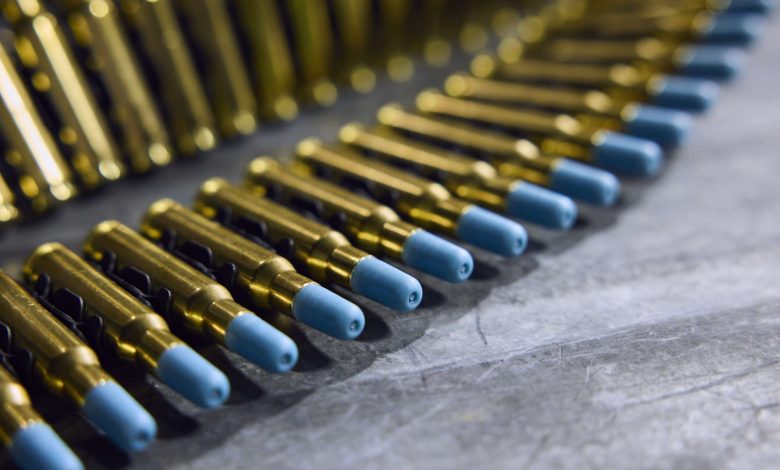
In a time where both civilian and military drones present an ever-growing and real danger, RWS offers a unique solution to neutralize DIY UAVs and commercial drones (UxS) in metropolitan settings with its innovative ‘Urban Drone Defense’ (UDD) ammunition, while also reducing personal and environmental risks – even in densely populated areas. This specialized short-range ammunition featuring a polymer projectile is designed for 7.62 x 51 caliber machine guns with a high rate of fire, ensuring precision and reliability for successful operations against small UAVs/UxS (drones).
UDD provides immediate and cost-efficient protection to safeguard infrastructure, military installations, or public safety. Constructed to be lightweight yet robust, this groundbreaking ammunition is crafted for peak performance in a variety of drone defense scenarios. Through the tactical use of low-emission materials, including the proprietary SINTOX primer, it also minimizes its ecological footprint for the user.
The innovative product solution includes two variants in 7.62 x 51 caliber for various operational scenarios:
• UDD LIGHT (featuring a blue polymer bullet, 1.0g / 15 gr), ideally suited for shorter distances of up to 100m in urban centers,
• UDD HEAVY (featuring a grey polymer bullet, ≤ 3.0g / 46 gr), specifically engineered for medium distances of up to 300m for securing suburban or rural environments, for example.
Key features of UDD at a glance:
• Cost-effective and efficient strategy against smaller commercial drones
• Lightweight polymer projectile, optimized for urban operations, cityscapes, and public spaces with increased risk of collateral damage
• Reduced background danger: approximately 80% decrease in danger zone compared to standard 7.62 x 51 caliber ammunition (UDD Light)
• Reliable performance in external machine guns with rapid firing capabilities
• Limited exposure to hazardous substances for operators: lower pollutants and REACh-compliant
• X-ray detectable projectile
RWS – Ignition Technology since 1886
RWS GmbH is recognized as one of the leading global manufacturers of small-caliber ammunition, ammunition components, and pyrotechnic materials for hunting, sports, and industrial applications, as well as for government agencies, military organizations, and law enforcement bodies. Founded in 1886 as Rheinisch-Westfälische
Sprengstoff-Actien-Gesellschaft, the company has been part of Beretta Holding since 2022. For more information about RWS GmbH, visit their website.
With over 50 global subsidiaries, Beretta Holding Group is acknowledged as an international leader with a prestigious reputation in the domains of hunting, sport shooting, and defense & law enforcement sectors due to its extensive array of premium products. For further information on Beretta Holding Group: press@berettaholding.com / https://berettaholding.com
RWS is a proud member of the Beretta Defense Technologies (BDT) alliance, a strategic collaboration of Beretta Holding companies dedicated to supporting the Defense and Law Enforcement sectors through the design, manufacture, and distribution of state-of-the-art weapon systems, ammunition, (electro-) optics,
apparel, and accessories. Masters of precision and innovation, these firms have pooled their technological expertise to act as a single-source partner to provide governments and agencies with the strategic instruments necessary to address the challenges of modern warfare and law enforcement. For more information on Beretta Defense Technologies: https://www.berettadefensetechnologies.com/