
Bundeswehr Strengthens Commitment: New Service Contracts for Heron 1 in Afghanistan and Mali
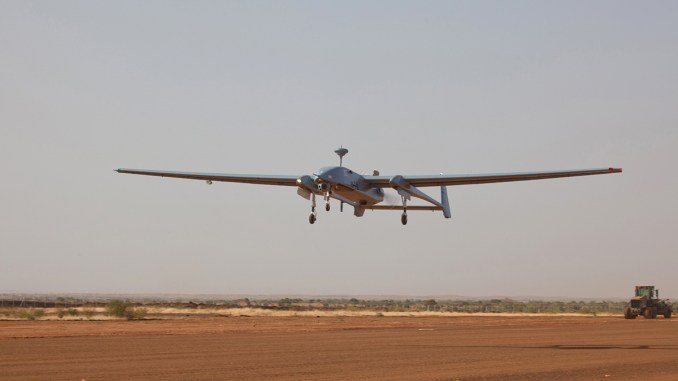
Airbus Defence and Space has partnered once again with the Federal Office of Bundeswehr Equipment, Information Technology and In-Service Support (BAAINBw) to renew a service contract for the Heron 1 unmanned aerial systems (UAS), which are actively utilized in Afghanistan and Mali.
In Afghanistan, the Heron 1 service was successfully extended in March 2020, covering the period from June 2020 to May 2021. This robust system has achieved over 46,000 flight hours across more than 4,100 operational flights. Notably, the German Air Force celebrated a decade of Heron 1 operations in Afghanistan, with the program’s inaugural flight dating back to March 17, 2010.
Meanwhile, in Mali, services for the Heron 1 have been extended from August 2020 to July 2021, with an option for an additional year. In this region, the drone has recorded over 11,500 flight hours through more than 1,200 operational missions. The Heron 1 first took to the skies in Mali on November 1, 2016, shortly after the initial service contract was signed in July 2016.
When combining the operations of the Heron 1 for the German Armed Forces in both Afghanistan and Mali, the UAV has logged an impressive total of over 57,500 operational flight hours.
These deployments operate under a collaborative model involving both the Bundeswehr and the industry. The provision, maintenance, and repair of the Heron 1 system are managed by Airbus Defence and Space in Bremen.
This collaborative operator model has repeatedly showcased high performance and reliability, achieving a commendable 99% system readiness during operations in both Afghanistan and Mali. Additionally, these missions contribute significantly to the Bundeswehr’s capabilities and expertise as they prepare for future Medium Altitude Long Endurance Remotely Piloted Aircraft Systems (MALE RPAS).
German reconnaissance efforts focus predominantly on crisis regions, aiming to enhance protection for both the local population and the German military personnel, as well as international contingents stationed in those areas.
Developed by the Israeli firm IAI (Israel Aerospace Industries), the Heron 1 is classified as an unarmed, medium-altitude long-endurance UAS, adept at operating continuously above active theaters. Its impressive wingspan of 16.6 meters allows it to cover vast areas, with a maximum mission endurance exceeding 24 hours.
The Heron 1’s military functionalities encompass a myriad of crucial tasks, including: detecting explosive devices from the air, escorting convoys and patrols, supporting combat situations, reconnaissance and route surveillance, establishing movement patterns, long-term monitoring, aiding situational assessments, and protecting assets and military installations. Furthermore, it plays a vital role in supporting humanitarian missions.
Currently, the Heron 1 systems in use by the German Armed Forces in Afghanistan and Mali are scheduled to be succeeded by the more advanced IAI Heron TP. This transition follows a contractual agreement signed in Berlin in July 2018 between Airbus Defence and Space and BAAINBw. The replacement initiative will commence with a two-year setup phase, followed by an operational phase spanning another seven years, paving the way until a sovereign European MALE UAS is fully developed.