


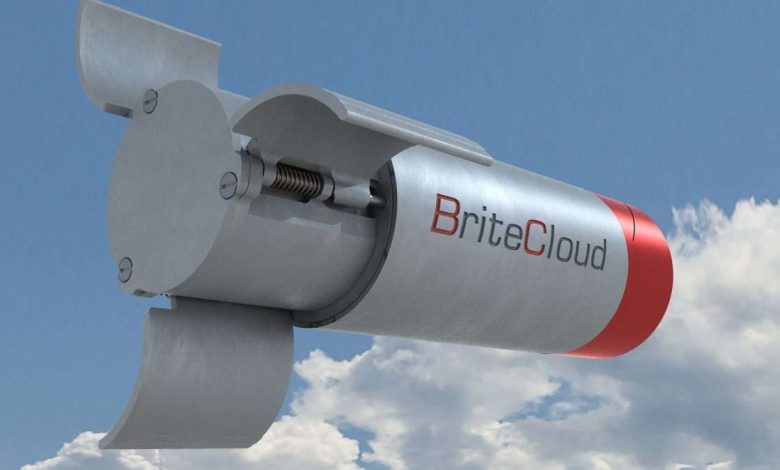
Leonardo and General Atomics Aeronautical Systems, Inc. (GA-ASI) are collaborating to provide the exceptional defense offered by Leonardo’s BriteCloud expendable active decoy to operators of the MQ-9 remotely-piloted aircraft system (RPAS). This partnership is meeting the increasing demand for safeguarding high-value unmanned aerial vehicles from contemporary radar-guided dangers during their missions.
Significant advancements have been achieved, with several BriteCloud rounds successfully launched from an MQ-9 in an aircraft survivability ‘carriage and release’ assessment, designed to confirm that the decoy can be safely deployed from the platform’s new Self-Protect Pod. Ongoing discussions are regarding additional tests with live rounds to showcase that BriteCloud can efficiently shield the MQ-9 from the most sophisticated radio frequency (RF) threats.
BriteCloud is a cutting-edge decoy, defending aircraft against the latest radar-guided hazards. As the world’s first and currently sole product proven to function effectively, BriteCloud integrates advanced jamming technology into a container the size of a drink can, enabling it to be launched from an aircraft in a manner similar to a flare. Developed and produced in the UK, it was initially adopted by the Royal Air Force after a rigorous testing campaign. As a distinctive capability, it is presently under evaluation by the US Armed Forces through the US Foreign Comparative Test (FCT) programme.
Diverse variants of BriteCloud are available for an array of aircraft types. The BriteCloud 218 (2x1x8 inch ‘brick’ round) is the version compatible with the MQ-9’s dispensing mechanism and is also appropriate for US-built combat aircraft like the F-15 and F-16. Conversely, the BriteCloud 55 variant caters to 55mm round-format dispensers on aircraft such as the Eurofighter Typhoon, Saab Gripen E, and Tornado GR4. A third variant, 55-T, is currently being developed for transport aircraft and helicopters.
BriteCloud utilizes Digital Radio Frequency Memory (DRFM) jamming technology, regarded as the ‘gold standard’ for defense against radar-guided surface-to-air and air-to-air missiles. This technology enables the BriteCloud round to detect and analyze incoming radar signals and, in response, produce and emit a compelling electronic ‘ghost’ signal, deceiving threat radars into pursuing the decoy instead of the aircraft.