
Aerial Innovations: Airbus Breaks Ground with Stratospheric 4G/5G Defense Comm Tests via Balloon Flight
Airbus Advances Stratospheric 4G/5G Defence Applications
Airbus has successfully conducted a high-altitude balloon demonstration showcasing its cutting-edge stratospheric 4G/5G defence applications. This innovative technology, known as the Airbus LTE AirNode, is a crucial component of Airbus’ Network for the Sky (NFTS) initiative, which aims to enhance secure military communications from airborne platforms.
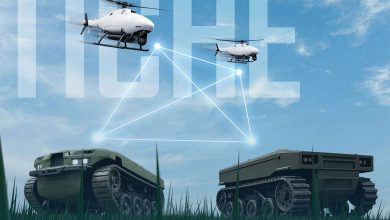
The recent tests reveal how high-altitude platforms, such as the Airbus Zephyr, can establish persistent and secure communication cells. These cells will relay vital information across various aircraft types, including helicopters, tactical UAVs, and MALE UAVs (Medium Altitude Long Endurance Unmanned Aerial Vehicles).
Collaborating with French and Canadian space agencies, Airbus successfully conducted its tests in Canada, reaching altitudes up to 21km above sea level. The stratospheric balloon carried the Airbus LTE AirNode, which generated a comprehensive 30km coverage area for private, secure communications. Utilizing two vehicles and drones, the Airbus team monitored the balloon’s trajectory over 200km, simulating an Intelligence, Surveillance, and Reconnaissance (ISR) mission through real-time 4K video transmission.
Data was communicated via a private network at speeds ranging from 0.5 to 4 Mbps, akin to 4G/5G mobile services. This technology pushes the boundaries of deployable communication solutions, significantly augmenting operational flexibility during aerial missions.
The LTE AirNode facilitates opportunistic and secure communications among nearby aircraft, ensuring robust connectivity during critical operations. This system provides high-security communications for airborne assets, whether operating from the ground, sea, or air, for extended periods—merging the consistent availability of satellite communications with UAV flexibility. This versatile ad-hoc network caters to diverse users, from special forces to disaster relief teams.
Airbus showcased its NFTS solution at the Farnborough International Airshow in 2018. This cutting-edge system integrates various communication technologies into a resilient global mesh network, enabling aircraft to function seamlessly within a fast-paced connected battle space. Currently, individual aircraft, UAVs, and helicopters operate on isolated networks with limited bandwidth and durability. NFTS aims to integrate technologies like satellite links from geostationary, medium, and low Earth orbit constellations, air-to-ground, ground-to-air, and air-to-air links, as well as voice transmission, 5G mobile communication cells, and laser connections into a singular, secure network.