
Northrop Grumman Secures Contract to Enhance A-10 Aircraft Durability
Northrop Grumman has secured a significant contract worth $185.7 million for the A-10 Aircraft Structural Integrity Program Legacy VII. This contract focuses on providing essential sustaining engineering services for A-10 aircraft.
The execution of this contract will take place in Clearfield, Utah, with an expected completion date of November 22, 2030. This contract is the outcome of a sole-source acquisition. At the time of the award, fiscal 2021 operation and maintenance funds amounting to $6,480,694 are being committed. The contracting activity is managed by the Air Force Life Cycle Management Center at Hill Air Force Base, Utah.
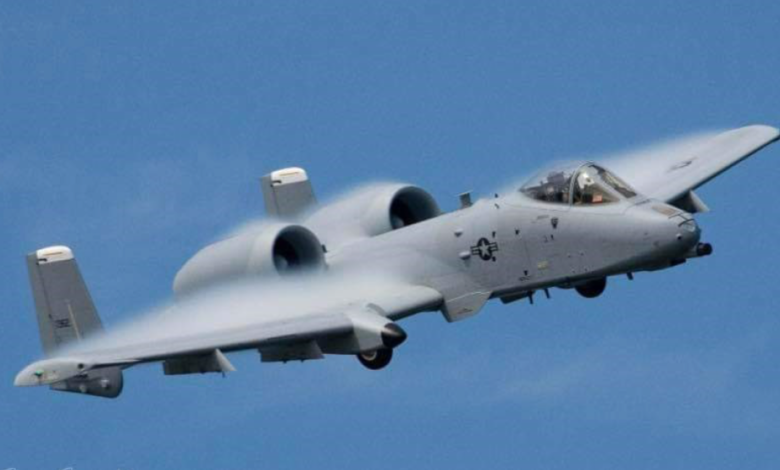
The Fairchild Republic A-10 Thunderbolt II, often called the “Warthog” or “Hog,” derives its name from the Republic P-47 Thunderbolt, a World War II fighter-bomber well-regarded for its effectiveness against ground targets. Specifically designed for close air support (CAS) of ground troops, the A-10 excels in attacking armored vehicles and tanks while providing rapid support against enemy forces. First entering service in 1976, it uniquely stands as the only production-built aircraft created solely for CAS in the USAF. In addition, its secondary role involves offering forward air controller support from the air, directing other aircraft in ground-target attacks, and is designated as OA-10 for this purpose.
The A-10 was built to enhance the capabilities of the A-1 Skyraider, particularly in terms of firepower. Central to its design is the 30 mm GAU-8 Avenger rotary cannon, which underscores its formidable combat capabilities. The aircraft’s structure features 1,200 pounds (540 kg) of titanium armor to safeguard the cockpit and critical systems, allowing it to withstand considerable damage and maintain flight. With its short takeoff and landing (STOL) capability, the A-10 can operate from airstrips close to combat zones, while its straightforward design facilitates maintenance even in rudimentary setups. The A-10 demonstrated its prowess during the Gulf War (Operation Desert Storm) and has proven effective in various conflicts, including Grenada, the Balkans, Afghanistan, Iraq, and the fight against the Islamic State in the Middle East.
The A-10A single-seat variant remains the sole version produced; however, one pre-production airframe was converted into the YA-10B twin-seat prototype to evaluate an all-weather, night-capable variant. In 2005, an upgrade program commenced to modernize existing A-10A aircraft to the A-10C configuration, enhancing them with advanced avionics for precision weapon use. Although the U.S. Air Force has indicated plans for the F-35 to replace the A-10, this proposal remains a topic of debate within the USAF and among policymakers. With an array of upgrades and wing replacements, the A-10’s operational lifespan could be extended until 2040, with no retirement date currently on the horizon.