

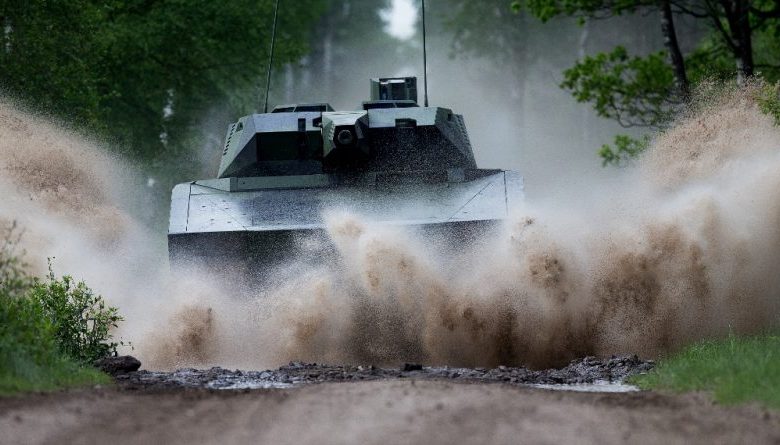
Hungarian Military Partners with Rheinmetall to Create Cutting-Edge Lynx Infantry Vehicles
This agreement assists the Hungarian Armed Forces in fulfilling their NATO obligations through sustained enhancement of the nation’s defense sector.
By signing a contract in Unterlüss on 17 August 2020, the Hungarian government has initiated a monumental initiative valued at over two billion euros to upgrade the country’s defense sector and military capabilities. This initiative was revealed by Hungary’s Secretariat of the Ministry for Innovation and Technology alongside the Commissioner for Defense Development. Rheinmetall, Europe’s leading manufacturer of military equipment, will collaborate with Hungary to establish a joint venture and production site in Hungary for the assembly of the latest Lynx infantry fighting vehicle.
Hungary stands as the inaugural NATO and EU member to opt for the Düsseldorf-based Group’s cutting-edge IFV. This decision is critical for Hungary’s ongoing military and industrial growth program, which seeks to swiftly evolve the Hungarian Armed Forces into a premier combat unit capable of effectively tackling security challenges within the Euro-Atlantic arena.
According to the joint declaration delivered by László Palkovics, Minister of Innovation and Technology, and Gáspár Maróth, Commissioner for Defense Development: “In alignment with its NATO obligations, Hungary is updating its heavy ground forces equipment. Following the modernization of tanks and artillery, it is now the infantry combat vehicles’ turn, which serve as the backbone of our capabilities framework. As the most sophisticated system of this nature, the Lynx has showcased its suitability for a pivotal role in the Army’s capabilities spectrum for years to come. Consistent with previous commitments made by the Hungarian government to fortify the nation’s armed forces, this collaborative effort extends well beyond the enhancement of military technology. Joining forces with a significant European enterprise will lead to the modernization of our defense sector and consequently to the diversification of our industrial portfolio.”
As Armin Papperger, chairman of the executive board of Rheinmetall AG, points out: “The Lynx’s commercial breakthrough is a significant achievement for us. The fact that we have convinced Hungary – a key EU and NATO ally – to select this groundbreaking vehicle amplifies this success. In making this forward-thinking procurement decision, Hungary’s leading political and military figures have
exhibited true leadership. This decision not only places Hungary at the forefront of European military technology but also reaffirms the Hungarian government’s dedication to being a reliable and more militarily proficient ally to its NATO partners, a strategy it rigorously pursues.”
“We’re immensely proud,” stated Mr. Papperger, “to contribute significantly to the ongoing development of Hungary’s defense technology capabilities in partnership with the local industry. We eagerly anticipate collaborating with our Hungarian allies and will do everything in our power to ensure the enduring success of this initiative.”