

Leonardo Leads the Charge: Showcasing Cutting-Edge Naval Innovations at Formidable Shield 2021
Leonardo’s maritime systems have undergone rigorous testing in a recent NATO drill, showcasing their cutting-edge technology and operational efficiency. This suite of systems, featuring detection, tracking, communication, command, and control functionalities, was exhibited from the 15th to the 30th of May at the MOD Hebrides Range in Scotland, UK, as part of the At Sea Demonstration / Formidable Shield 2021 (ASD / FS21), NATO’s primary air defense and anti-missile exercise.
The authentic scenario involved live and simulated confrontations against subsonic, supersonic, and ballistic missiles in the atmosphere. Naval ships, aircraft, and ground vehicles from ten nations assessed their information exchange and interoperability capabilities as part of a simulated coalition-level response.
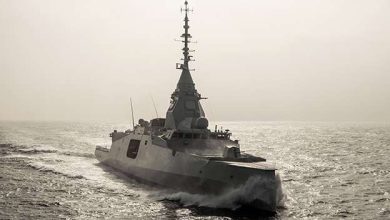
A variety of Leonardo innovations were featured aboard the Italian Navy’s Antonio Marceglia, the eighth frigate delivered under the FREMM (European multi-purpose frigate) initiative. This included the Kronos MFRA (Multi-Function Radar Active) 3D radar, adept at locating, classifying, and tracking targets within a 250km radius. The Kronos MFRA successfully identified ballistic missiles in flight as they attained speeds surpassing 1,800m/s with an acceleration exceeding 6G, maintaining tracking over 200km.
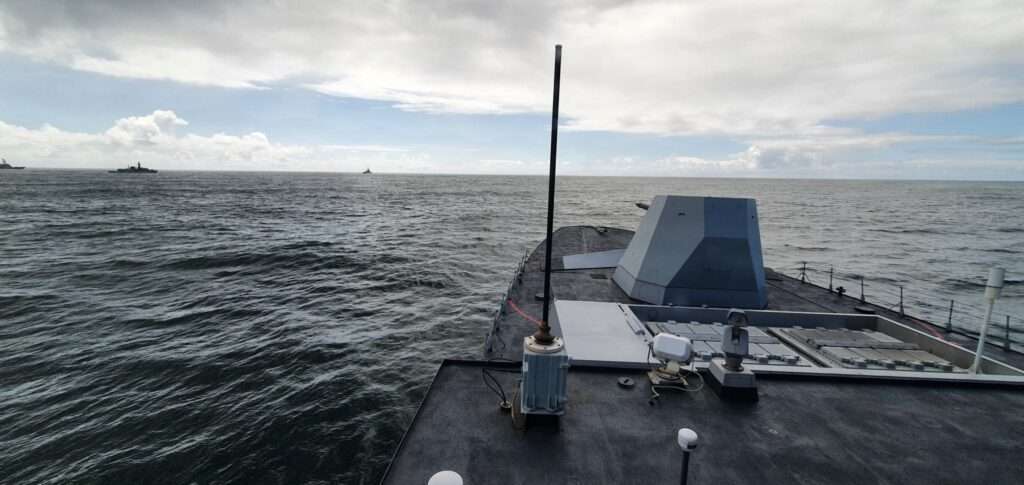
During the trial, the frigate also utilized its MDLP-EVO (Multi Data Link Processor) communication framework to disseminate tactical information, while its IFF (Identification Friend or Foe) system, updated to NATO Mode-5 standards, facilitated the differentiation between allies and potential adversaries.
The helm of the ship, its Combat Management System (CMS), synchronized the frigate’s air defense and missile countermeasure operations, processing data from the ship’s array of sensors and delivering a real-time tactical overview of the situation to the frigate crew and other forces, aiding decision-making and actions at a coalition level.
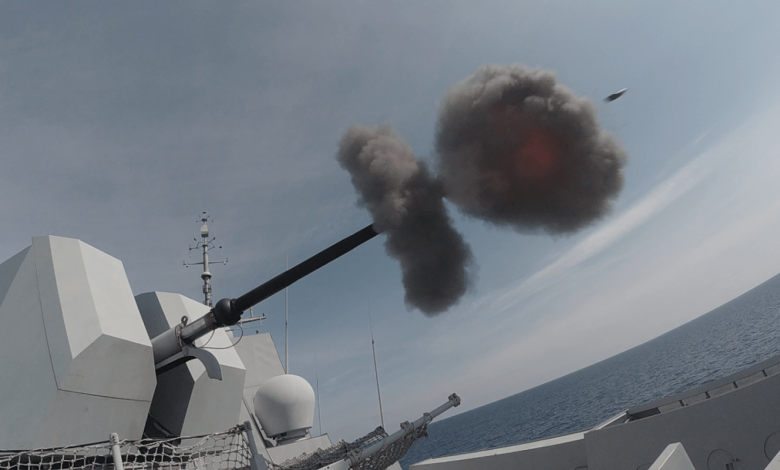
Leonardo’s munitions systems also yielded favorable outcomes during the assessment. The Super Rapido naval gun, equipped with 76mm DART guided projectiles, demonstrated its capability to safeguard its host vessel from even the most advanced threats. Concurrently, the Aster 30 missile from MBDA, a European consortium in which Leonardo holds a 25% stake, validated its proficiency in neutralizing incoming missiles.