

Raytheon Set to Deliver Advanced AIM-9X Block II Sidewinder Missiles to South Korea
The U.S. State Department has approved a significant Foreign Military Sale to the Republic of Korea for AIM-9X Block II Tactical Sidewinder Missiles and associated equipment, amounting to an estimated $158.1 million. The Defense Security Cooperation Agency officially notified Congress of this potential sale on October 1.
The Republic of Korea’s request includes 115 AIM-9X Block II Tactical Sidewinder missiles, 50 AIM-9X Block II Captive Air Training Missiles (CATM), 20 Tactical Missile Guidance Units, and 20 CATM Guidance Units. Additionally, the sale encompasses containers, weapon system support, software, surface transportation, missile technical assistance, and other essential program support elements. The primary contractor for this deal will be Raytheon Corporation based in Tucson, AZ.
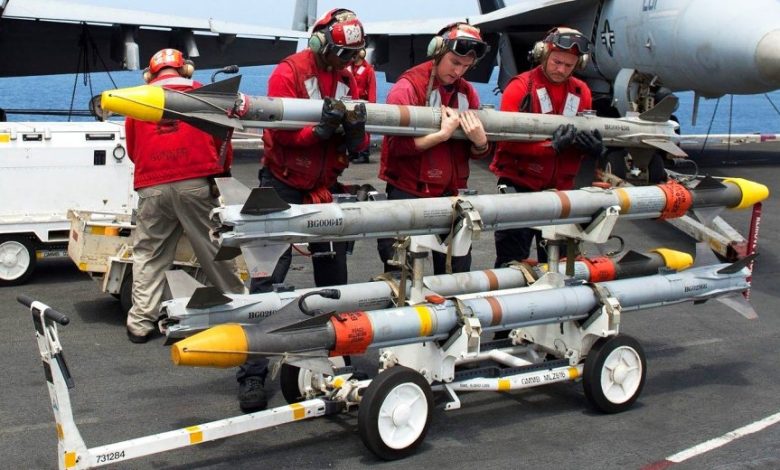
Raytheon’s AIM-9X, part of the renowned Sidewinder family, represents the latest advancements in short-range air-to-air missile technology and is the most widely utilized air-to-air missile, currently operational in over 40 nations. Entering service in 2015, the AIM-9X Block II—also referred to as AIM-9X-2—boasts significant enhancements, including data-link and lock-on-after-launch capabilities.
Noteworthy features of the AIM-9X include a high off-boresight focal-plane array seeker integrated into a highly maneuverable airframe, enhanced infrared anti-countermeasures, and the ability to engage with a launch-and-leave missile capability. This advanced missile system capitalizes on passive infrared energy for the acquisition and tracking of enemy aircraft. The AIM-9X program is a collaborative effort between the U.S. Navy and U.S. Air Force, led by the Navy. Both services are currently procuring the AIM-9X Block II, which introduces improvements over the Block I missile, including enhanced lock-on-after-launch capabilities and a one-way forward quarter datalink capability. Initial Operational Capability (IOC) was achieved in March 2015, followed by the commencement of Full Rate Production (FRP) in August 2015.