
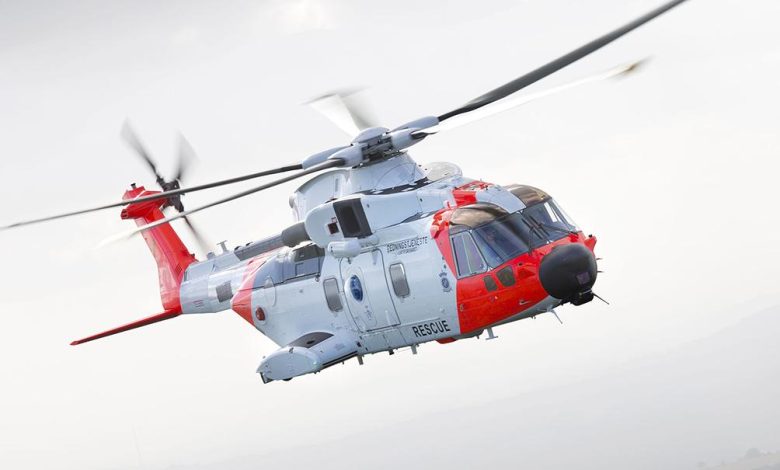
When evaluating a modern nation, a key indicator is the level of protection a government can provide to its citizens during emergencies and natural disasters. This is especially crucial in regions facing extreme climatic and environmental challenges. Norway exemplifies this commitment by investing in advanced technology, recently acquiring 16 new Leonardo AW101 search and rescue aircraft designed for long-range and maritime operations.
Operating in the Arctic Circle, where temperatures plummet and strong winds prevail over a vast coastline with turbulent seas, Norwegian rescue teams rely on the AW101—affectionately dubbed the SAR Queen. This aircraft stands out as the ultimate support for challenging search and rescue missions. Engineered by Leonardo, the AW101 is equipped with state-of-the-art technology that allows it to perform effectively in conditions unmanageable by previous aircraft.
On September 1, 2020, six of these helicopters were officially commissioned at the Sola base in a ceremony attended by important local and national authorities. By 2021, it’s anticipated that the Ørland and Banak bases will also be operational. To date, Norway has received six of the planned 16 helicopters, with the remainder undergoing assembly, integration, and testing at Leonardo’s facility in Yeovil, UK. In its inaugural month, the SAR Queen completed missions overcoming harsh weather, totalling approximately 80 flight hours. Most of these missions were dedicated to search and rescue operations, including a nighttime mountain rescue and emergency transport scenarios.
The newly introduced AW101 helicopters boast enhanced digital capabilities and increased power, enabling them to cover extended distances and broader areas. These improvements are critical during a SAR (Search and Rescue) mission, making a significant impact on outcomes. With a legacy as a reliable Sea King operator, Norway progressively replaces its SAR fleet with the AW101, which arose from a collaborative effort between the UK and Italy to replace their respective naval Sea King fleets.
The AW101 is distinguished as one of the most sophisticated Search and Rescue helicopters available, featuring a comprehensive ‘anti-ice’ system. This system is particularly vital for Norway’s climate, utilizing sensors to detect ice accumulation on the helicopter blades, ensuring uninterrupted operational capacity.
Additionally, the electronic anti-collision system, developed by Leonardo, leverages advanced laser technology to monitor the helicopter’s surroundings. This system offers 360-degree coverage, detecting various obstacles—including rock formations, trees, transmission structures, and oil platform infrastructures—during standard and stationary flight conditions. It alerts pilots with visual and acoustic indicators, providing critical information on proximity and risk levels.
Enhancing mission safety is the Osprey radar, also designed and manufactured by Leonardo, featuring an Active Electronically Scanned Array antenna. This radar ensures comprehensive 360-degree coverage with rapid environmental scanning, and thanks to its fixed antenna technology, it boasts reduced maintenance needs while being lightweight—an essential advantage in flight operations.
Another innovative feature of the Norwegian AW101 is the Mobile Phone Detection and Location System. This technology locates missing persons in remote areas as long as their mobile devices are switched on, intercepting the waves emitted for geolocation.
The helicopter’s cockpit is equipped with advanced synthetic representation systems, featuring five expansive displays that present 3D visuals populated with pre-installed maps. This capability allows for obstacle visualization even under low-light conditions, significantly enhancing pilot situational awareness during flight.
The management of this comprehensive technological framework involves both the pilot and co-pilot alongside a specialized mission console developed by Leonardo for research operators. These operators gather information from various systems, sharing data seamlessly with the pilots through cockpit displays, enhancing team communication and improving the chances of mission success.
Interestingly, the AW101’s onboard computer manages stability during inclement weather, automatically correcting the craft’s position without requiring pilot intervention. This feature is crucial during recovery operations, allowing the aircraft to maintain its position while safely retrieving individuals. Furthermore, with its spacious interior—measuring 27 m3—the AW101 can accommodate over 50 standing passengers, proving invaluable in situations of large-scale natural disasters or emergencies involving numerous casualties.
As part of its ongoing development, Norway has established training infrastructure for AW101 crews—including flight simulators co-developed by Leonardo. These simulators replicate both flight and mission experiences, certified to Level D standards; one hour of simulation equates to one actual flight hour, closely mimicking the helicopter’s functionalities and the crew’s physical sensations. This innovative training reduces fuel and maintenance costs while enabling crew members to practice safety protocols and respond to unexpected scenarios.
Notably, the AW101 became the world’s first helicopter to transport patients using biocontainment stretchers, effectively isolating infected individuals from the environment and medical personnel during transport.
With these impressive technological advancements, AW101 crews engaged in SAR operations possess the expertise and information essential for effective search and localization efforts. This progress signifies a transformative leap in emergency assistance for populations in critical situations, prioritizing safety and efficiency.