

Soaring into the Future: The B-52’s Journey to 2050
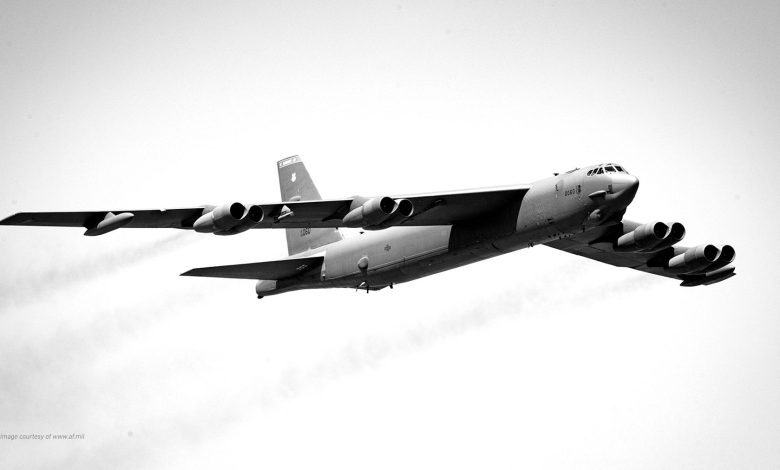
When the United States Air Force (USAF) introduced the iconic Boeing B-52 bomber in the 1950s, few could have predicted its enduring legacy. Fast forward to today, and the USAF has committed to keep the fleet of 76 B-52H aircraft operational until at least the 2050s. These stalwart planes, some manufactured in the 1960s, continue to serve vital roles in national defense.
The B-52 Stratofortress, a long-range, subsonic, jet-powered strategic bomber, has been pivotal in deterring global threats throughout various conflicts, from the Cold War and Vietnam to Desert Storm and the ongoing war on terror. As this fleet surpasses half a century of service, the USAF has decided to re-engineer the B-52 under the Commercial Engine Replacement Program (CERP). This upgrade will equip these legendary bombers with state-of-the-art commercial off-the-shelf jet engines that will:
- Enhance aircraft longevity
- Minimize maintenance costs
- Improve fuel efficiency
- Extend operational range
- Upgrade diagnostic capabilities
- Lower greenhouse gas emissions
This is indeed a remarkable milestone for these tireless warbirds.
Since its inception, Collins Aerospace has been integral to the B-52’s evolution. Collaborating with Rohr Aircraft Corporation, one of Collins’ legacy companies, parts of the original propulsion system were crafted for Boeing’s revolutionary bomber. As the B-52 progressed from the initial “A” model to the current “H” model introduced in the 1960s, Collins Aerospace continually innovated to enhance the aircraft’s electrical power and engine thrust. Over the years, the company has provided nacelles, struts, fuel pod tanks, and the aft fuselage structure.
“We have contributed to every B-52 variant, delivering 5,952 nacelles and 2,976 struts,” stated Marc Duvall, president of Aerostructures at Collins Aerospace. “Our expertise in nacelle manufacturing enables us to meet Boeing and Air Force standards effectively. Additionally, our service and repair network ensures that these components maintain flight readiness as the B-52 mission approaches its centennial.”
For the USAF, having access to the safest and most efficient components is paramount. Collins Aerospace’s reliable designs and punctual delivery consistently guarantee maximum fleet readiness, ensuring optimal performance for both military and commercial aviation.
“With 80 years of experience in complex, highly engineered nacelle structures, we believe we lead the industry,” Duvall remarked. “Our team currently supports over 50 different programs, and we’ve successfully certified our products for 18 new programs in the past decade. We take pride in the trust our customers place in us.”
Recently, Collins Aerospace contributed to two other significant USAF re-engine initiatives: the Lockheed C-5 and Boeing KC-135. The company provided struts for the new C-5M engine, as well as inlets and various cowls for the nacelle, adapting existing technologies. Additionally, for the KC-135, Collins supplied inlets and fan cowls for around 425 aircraft.
“The B-52 boasts a remarkable 70-year history of reliability and performance since its debut in the 1950s, with our propulsion components featured on every aircraft for each flight hour,” concluded Duvall. “Our longstanding partnership with the USAF on the B-52 has uniquely positioned us to support its next chapter in this iconic mission.”