

Soaring Through Time: The Legacy of the F-16 Fighting Falcon from Its 1970s Origins
In the early 1970s, a dedicated group of engineers and defense analysts known as the Lightweight Fighter Mafia conceived the F-16 as a solution to the growing weight and maneuverability issues of contemporary fighter aircraft.
At the aerospace division of General Dynamics in Fort Worth, Texas, a visionary team set out to develop a new fighter jet that aligned with the ambitious objectives of the Lightweight Fighter Mafia. Their mission was to swap heavy payloads for enhanced speed and agility, resulting in a compact, cost-effective fighter jet capable of outmaneuvering adversaries and evading missile attacks.
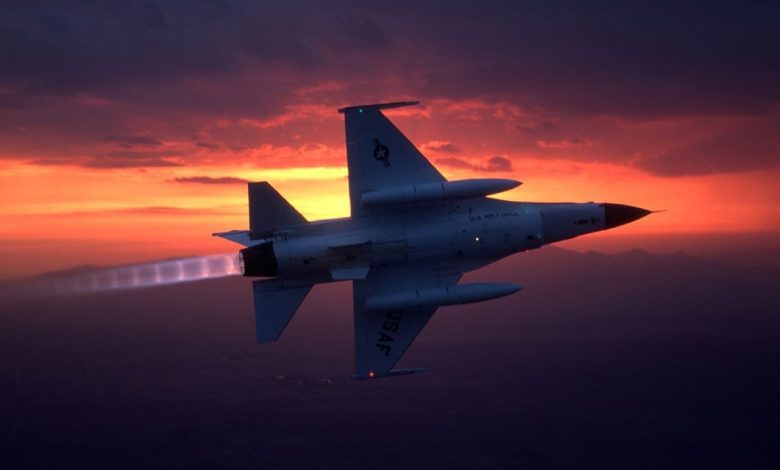
From 1975 onwards, the design team meticulously brought these concepts to life, creating an advanced combat aircraft that integrated groundbreaking technologies. The F-16 featured a smoothly blended-wing body for superior lift and control, a vital fly-by-wire system ensuring stability and agility, along with an ergonomically designed ejection seat, side-mounted control stick, head-up display, and bubble canopy to enhance pilot survivability and visibility.
While it was originally designed for speed, the F-16 adapted to fulfill more versatile mission requirements by the 1980s, including precision bombing and close air support. Engineers at Fort Worth enhanced the aircraft with more sophisticated weapons and targeting systems, transforming the F-16 into a formidable multirole fighter.
The F-16’s exceptional versatility was prominently showcased in 1991 during Operation Desert Storm, where it outpaced all other aircraft in mission execution. F-16 pilots engaged in bombing airfields, military production facilities, and missile installations, even downing an Iraqi MiG-25 in the aftermath of the operation.
With over 4,500 F-16s manufactured since its inaugural production order in 1975, this iconic aircraft serves 26 nations worldwide. Although it is set to remain operational with U.S. forces until at least 2025, as the fifth-generation F-35 takes on more responsibilities, Lockheed Martin continues to innovate new versions of the F-16, fulfilling international orders from countries like Morocco, Turkey, and Iraq.