

Thales Chosen to Build NATO’s Groundbreaking Defence Cloud for Armed Forces
NATO has chosen Thales to deliver the inaugural certified defense cloud solution capable of being implemented in the operational theater within 24 hours. Thales was picked following an international competitive bidding process, based on its expertise in defense systems integration. With this agreement, the Group ventures into a novel market segment, showcasing its ability to merge superior civil and commercial technologies available, tailoring them to meet the requirements of the armed forces.
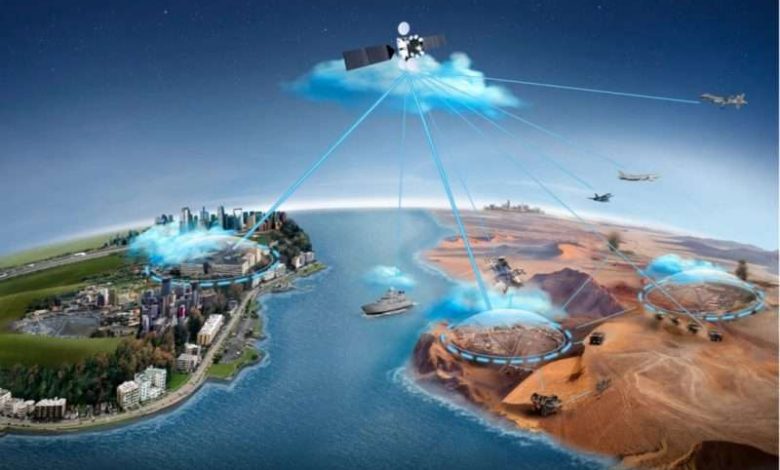
As military operations evolve to be more data-centric, access to essential data and applications is an imperative prerequisite for the armed forces. The defense cloud crafted by Thales permits the forces to analyze and disseminate data in real time from the command center to the operational field, advancing their digital transformation securely and expediting the decision-making cycle to secure and sustain an operational edge.
Previously, deploying the necessary assets could span several months, requiring numerous specialized engineers close to the combat zones. With Nexium Defence Cloud alongside its Service Design Studio and orchestration system, a concise team of experts can implement IT services and applications to sites thousands of kilometers away in a matter of hours. This solution is founded on a comprehensive strategy that includes applications management, IT, networks, and security, with a universal system architecture designed to cater to various confidentiality levels.
Nexium Defence Cloud integrates the finest civil and commercial technologies to offer a complete, modular, sovereign solution that empowers forces to operate entirely independently in the operational theater. It presents a broad range of possible configurations, from high-capacity and effortlessly scalable infrastructure for command centers to containerized systems that can transform a forward base into a new cloud node within hours.
This effortless interconnection within temporary organizations and command frameworks heightens mission effectiveness with an unmatched level of security.
Nexium Defence Cloud stands as the most compact, finely integrated, and modular solution accessible today. It encompasses all the components of military command posts (cabinets, servers, data storage devices, monitoring systems, etc.) and fulfills performance standards in terms of size, weight, and power (SWaP) to facilitate deployment and minimize the logistics footprint.
Through this agreement, Thales once more illustrates its competency in system certification and standardization. Its defense cloud solution is designed to adhere to NATO’s Federated Mission Networking (FMN) standard requirements, which outlines the framework for collaboration among command-and-control networks for coalition forces. Nexium Defence Cloud possesses all the essential features to emerge as the benchmark solution for the high-value deployable command posts needed for the coalition operations of the future.
“Thales is honored to be contributing to the digital evolution of the armed forces by providing this first deployable, certified, tactical defense cloud solution. We extend our gratitude to NATO for reestablishing their confidence in our proficiency in secure, interoperable information and communication systems.” – Marc Darmon, Executive Vice-President, Secure Communications and Information Systems, Thales.