

French Navy Boosts Underwater Defense with Innovative SonoFlash Sonobuoy by Thales
The French Navy has chosen the SonoFlash next-generation sonobuoy from Thales. Introduced at the Euronaval exhibition in October 2018, SonoFlash is set to empower France in achieving its strategic objectives for acoustic sensor technologies.
The challenge posed by submarines is advancing swiftly. Thirty years prior, only superpowers possessed advanced underwater warfare capabilities, but a multitude of nations now deploy contemporary submarine fleets. Simultaneously, forces are increasingly engaging in littoral environments, which present significantly greater complexities for sonar systems compared to the relative transparency of open-ocean conditions.
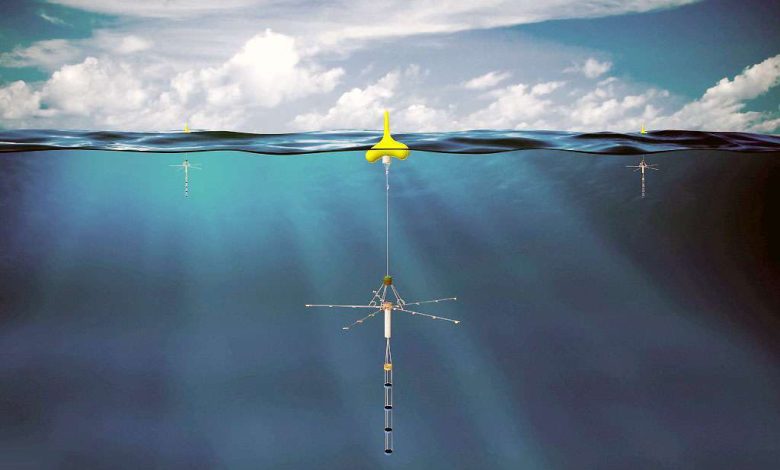
In response to this shifting threat landscape, Thales has engineered the SonoFlash buoy, a next-gen sonobuoy featuring an unmatched performance-to-weight ratio. It is built on decades of acumen in sonars and acoustic sensors, presenting a groundbreaking solution.
Its cutting-edge design and sophisticated technology incorporate various essential features to deliver extraordinary performance. Current sonobuoys are either passive or active. Conversely, the SonoFlash buoy merges the best attributes of both modalities, pairing a robust, optimized low-frequency transmitter with a highly-directive passive receiver. This synergy, coupled with its long endurance, makes the SonoFlash buoy ideal for a vast range of deployment scenarios.
Wholly compatible with other families of Thales sonars, the SonoFlash buoy provides exceptional tactical flexibility and unveils promising new avenues for multistatic operations. For instance, when combined with the FLASH dipping sonar, the SonoFlash buoy allows an aircraft to enhance its coverage area, responding with increased agility to evasive maneuvers by submarines. Due to its digitized signal and optimal communication range, the data from the SonoFlash buoy can be effortlessly utilized by any piloted or remotely piloted aircraft, naval vessel, or shore center equipped with a sonobuoy processing system.
The French Navy will be the inaugural operational user of the SonoFlash buoy, which will be deployed via the upgraded Atlantique 2 maritime patrol aircraft and NH90 Caïman tactical transport helicopters. It is set to be delivered to the Navy by 2025 and may also find its way into export markets, equipping all modern maritime patrol aircraft and helicopters, as well as various unmanned platforms, including autonomous surface vehicles and rotary-wing (VTOL) and fixed-wing UAVs equipped with an appropriate multi-sonobuoy dispenser.
Produced in France in collaboration with a network of SMEs such as TELERAD, Selha Group, and Realmeca, the SonoFlash buoy capitalizes on Thales’s mastery in acoustic sensor technology to support France’s ambition for sovereignty in strategic industries.
“Thales has integrated a decade of innovation in hardware and digital technologies into a tube measuring 91.4 cm in length and 12.3 cm in diameter. SonoFlash enhances the operational scope of a naval force’s anti-submarine warfare capabilities, surpassing all other sonobuoys currently available on the market, and providing a flexible and easy-to-deploy solution for tracking submarines from any piloted or remotely piloted aircraft, frigate, or unmanned surface vehicle. We appreciate the trust placed in us by the DGA and the Navy and are excited to collaborate with French partner SMEs to drive this project to successful completion, thereby reinstituting France’s sovereign capabilities in sonobuoys.” Alexis Morel, VP Underwater Systems, Thales.