

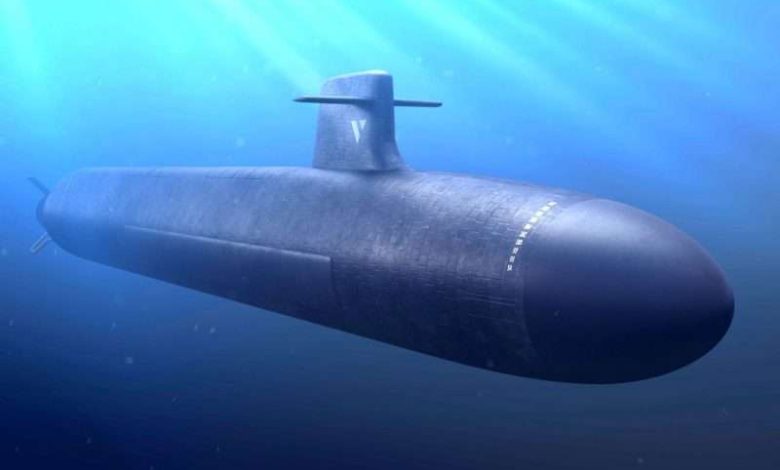
Thales Unveils Cutting-Edge Sonar System for France’s Next-Gen Nuclear Submarine Fleet
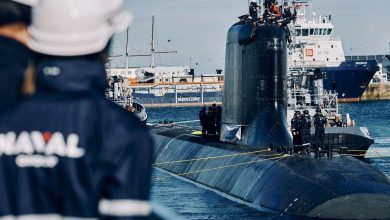
(Naval Group)
On Friday, 19 February, Minister of the Armed Forces, Florence Parly, declared the commencement of the comprehensive development stage of the SNLE 3G initiative aimed at constructing France’s next-generation nuclear-powered ballistic-missile submarines (SSBNs).
As an element of the SNLE 3G initiative, the French defense procurement agency (DGA) has entered a Memorandum of Understanding (MoU) with Thales for the creation of an extensive sonar suite, incorporating a wide array of sonar arrays and accompanying processing systems.
The anticipated technological advancements for the various sonar systems will result in substantial enhancements in data volume compared to existing solutions, necessitating the incorporation of artificial intelligence and Big Data protocols.
With the initiation of comprehensive development for France’s third-generation nuclear-powered ballistic-missile submarines (SNLE 3G), Thales is engineering a new sonar suite utilizing groundbreaking technologies that signify a notable departure from the currently deployed systems.
Thales will supply state-of-the-art flank arrays and bow-mounted sonars, a towed linear array employing optical technology (ALRO), along with all ancillary devices forming the sonar suite (intercept arrays, echo-sounders, underwater communication systems). The dimensions of the arrays and the frequency bands employed will yield exceptional performance in terms of three-dimensional (3D) detection precision (azimuth, elevation, range).
The ALICIA sensor data processing system (Analyse, Localisation, Identification, Classification Intégrées et Alertes), featuring a user interface developed to manage the variability and magnitude of available data, will enhance operator productivity and furnish decision-making support.
The new sonar suite will be systematically rolled out, with the initial technological components and system iterations expected to be installed on second-generation SSBNs (SNLE 2G) starting in 2025, and on third-generation submarines (SNLE 3G) commencing in 2035.
“Thales teams have concentrated their efforts on the SNLE 3G endeavor to ensure it leverages our finest sonar advancements that have been developed over the past five years as part of nearly 50 years of dedicated investments in sovereign R&D to ensure the security of France’s SSBNs. The new sovereign sonar array, processing, and Big Data technologies will provide unmatched performance for third-generation SSBNs and will also enhance the upgraded Triomphant-class second-generation SSBNs. We appreciate the trust the Ministry for the Armed Forces has placed in us and are excited to collaborate closely with Naval Group on this significant national initiative.” Alexis Morel, Vice President, Underwater Systems, Thales.