
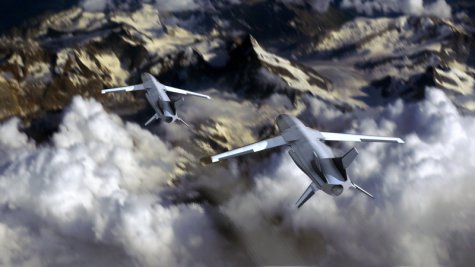
Synergizing Human and Drone Forces: Unlocking New Potential Beyond Individual Assets
Exploring the Future Combat Air System (FCAS): Beyond the New Generation Fighter (NGF)
In the realm of modern warfare, the Future Combat Air System (FCAS) stands out as a sophisticated combat System of Systems. Unlike the New Generation Fighter (NGF), FCAS integrates a wide array of connected assets, harnessing cutting-edge technologies. This article delves into the essential elements that comprise this groundbreaking system.
Western air forces are currently grappling with two significant trends: the escalating complexity of Integrated Air Defence Systems (IADS) and a noticeable decline in the availability of advanced combat aircraft. These challenges create a scenario where, when combined, forces may struggle to deploy sufficient combat mass to counteract adversarial IADS effectively.
One promising solution lies in the collaboration of manned combat aircraft with unmanned systems. This Manned-Unmanned Teaming strategy not only enhances operational capability but also mitigates risks for pilots. Airbus is at the forefront of this field, championing innovative technologies that facilitate seamless integration.
At the core of Manned-Unmanned Teaming are purpose-built, modular Unmanned Aerial Vehicles (UAVs) termed Remote Carriers (RCs). These advanced UAVs will collaborate with next-gen fighters like the NGF and existing platforms such as the Eurofighter. By deploying packs of RCs alongside traditional aircraft, we can achieve the augmented combat mass crucial for operational success in contested environments. This flexibility allows adaptation to various mission requirements through the incremental capabilities offered by RCs.
Increased effectiveness stems from novel tactical approaches emphasizing collaborative combat, deception, and numerical superiority to overwhelm opponents. Enhanced efficiency is gained by ensuring the right mix of capabilities is available for every mission. While manned assets maintain a safer distance, RCs engage threats directly, thereby enhancing the survivability of manned platforms.
Equipped as both remote sensors and effectors, RCs are capable of carrying diverse payloads, including Intelligence, Surveillance, and Reconnaissance (ISR) technologies as well as kinetic and non-kinetic effectors. This versatility enables a wide array of missions, including Air-to-Air Combat, Target Acquisition, Reconnaissance, Airborne Electronic Attack, and strikes, tailored to specific operational needs.
To realize these transformative capabilities, Airbus is pioneering the development of RCs. These will encompass a family of air vehicles, ranging from lightweight, expendable options to more advanced loyal wingman configurations.
Currently, Airbus is collaborating with industry partners to evaluate this spectrum within the FCAS Joint Concept Study. This initiative aims to ascertain the most effective designs, progressing toward the Next Generation Weapon System, all while adhering to principles of commonality and modularity for enhanced cost-effectiveness.
The Future of Air Power
For many years, Airbus has been at the leading edge of unmanned aerial systems development for military and institutional clients. In 2019, four nations—France, Germany, Italy, and Spain—selected Airbus as the prime contractor for the future European Medium Altitude Long Endurance Remotely Piloted Aircraft System (MALE RPAS) program, a testament to their confidence in Airbus’ capabilities.
Airbus has an impressive track record in UAV technology, exemplified by the Barracuda Agile UAV, which first flew in 2006. This platform paved the way for advancements in high-speed drones and autonomous operations. Moreover, in 2018, a successful partnership with the German customer showcased the integration of DT-25 target drones with a LearJet, overcoming some key challenges in Manned-Unmanned Teaming. Ongoing investments in advanced communication systems and teaming intelligence are set to culminate in a significant multi-domain demonstration.
Manned-Unmanned Teaming: Transforming Military Operations
The technological roadmap for Manned-Unmanned Teaming focuses on several key areas. One critical aspect is ensuring that unmanned assets can communicate effectively with each other and with manned platforms, requiring robust data link solutions in conjunction with the Multi-Domain Combat Cloud—a fundamental component of FCAS.
Additionally, the efficient coordination of manned and unmanned vehicles is vital for successful mission execution. Airbus is dedicated to developing AI-driven teaming intelligence concepts, incorporating swarming and distributed intelligence tactics. Furthermore, airframe solutions for future unmanned systems will leverage lessons learned from existing UAVs and combat aircraft in conjunction with the expertise of FCAS partners, creating a new paradigm in modern warfare.
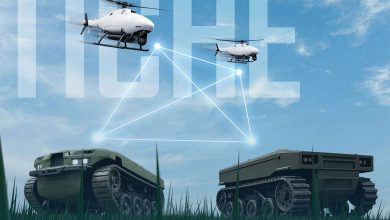
Manned-Unmanned Teaming applications extend beyond combat scenarios, proving invaluable in areas such as Maritime Patrol and Search and Rescue missions. By integrating in-service unmanned systems, we can greatly enhance situational awareness for manned platforms. Airbus Helicopters is exploring the potential for combat helicopters to team with rotary-wing drones, significantly increasing both survivability and combat effectiveness. The multi-domain nature of the combat cloud opens doors for collaboration with ground-based or naval assets as well.
As the leader in Manned-Unmanned Teaming developments, Airbus has successfully demonstrated advanced technologies and industrial capabilities. This innovative approach promises to amplify the effectiveness of both piloted and unmanned aircraft, exemplifying how collaborative strategies can achieve greater operational outcomes than individual components alone.